During a particularly challenging time in late 2022, I looked at ways]]>
I have treatment-resistant depression. Like many I've grappled with my diagnosis; on the one hand I have words to describe how I feel, and on the other I feel a burden of not feeling well enough.
During a particularly challenging time in late 2022, I looked at ways I could take back control of my diagnosis, aside from the talking and SSRIs - expert by experience opportunities. And in doing so, I came across an advert for participants with treatment-resistant depression to be involved in a clinical study at King's College London's Clinical Research Facility exploring brain function and cognitive responses when taking controlled doses of ketamine.
They say don't do drugs, but if it's the switch that prevents me going to in to void, dose me up. After a screening period, I entered the research facility to do some baseline assessments of my bloods, urine sample (no recreational drugs), and my cognition, before heading for the first of 3 MRI scans.
If you haven't had the pleasure of being strapped to a gurney with a heart rate monitor, and padded earmuffs, whilst a bleep test literally rattles you in a cage, you're in for an experience. I'd recently had the pleasure of seeing Beyonce's Renaissance Tour, so to centre myself I imagined I was an Alien Superstar in the portal of her mind. With a clicker box at my side, I completed tasks hitting the buttons when a shape appeared on a screen reflected in front of me, and identifying the gender and emotions of black & white photos flashing on screen. About an hour after entering the portal, I was pulled out back to reality.
Returning for my first round of (double blind) dosing I was hooked up a slow-release IV drip whilst reclined on a chair-bed.
Brain
I've since joined the King's College London's Clinical Research Facility Patient & Public Involvement group, supporting their Equality, Diversity & Inclusion startegy.
Here's some things I've learned along the way:
- No one experience is the same, but there'
I have been really fortunate to sit on a variety of lived experience advisory groups and in turn help shape how services are developed, promoted and evidence their needs.
Here's some things I've learned along the way:
- No one experience is the same, but there's a lot of shared challenges and successes
- You can't manage success with old tools - invest in data and monitoring to evidence need, client journeys and the value of your work
- Value the role the charity sector has in reducing the likelihood of a client returning to high-need services and invest in preventative and social models of care
- There's a lot to be learned from responses to different health conditions, including the HIV pandemic - involve intersectional and intergeneration voices
- When you invest in minoritised communities, you support the majority
PeerFest is annual event celebrating the power of mental health peer support. Attended by over 250 people who have accessed or delivered peer support, it provides a safe trauma-informed space for people to learn, XXX and XXX.
]]>Working for a pan-London charity, I led on the recruitment, engagement and retention of over 100 volunteers. This including creating role profiles; advertising, shorting and interviewing; training and supervising; and insuring that they all felt confident in delivering their roles.
I designed a volunteer booking system, which meant were able to create 'bubbles' of staff and volunteers delivering frontline services during the Covid-19 pandemic. This also meant that they were informed of where the shift took place, what to bring, the staff member's contact details, and confirmatory emails and text messages.
Below you'll see examples of:
- Role profiles outlining skills and knowledge requirements, time commitment, training and what to expect from the organisation
- Postcards and a fold-out booklets advertising volunteer opportunities
- Newsletters advertising opportunities and summarising their impact
- Training materials
- Socials to thank the volunteers and bring them together to celebrate our successes
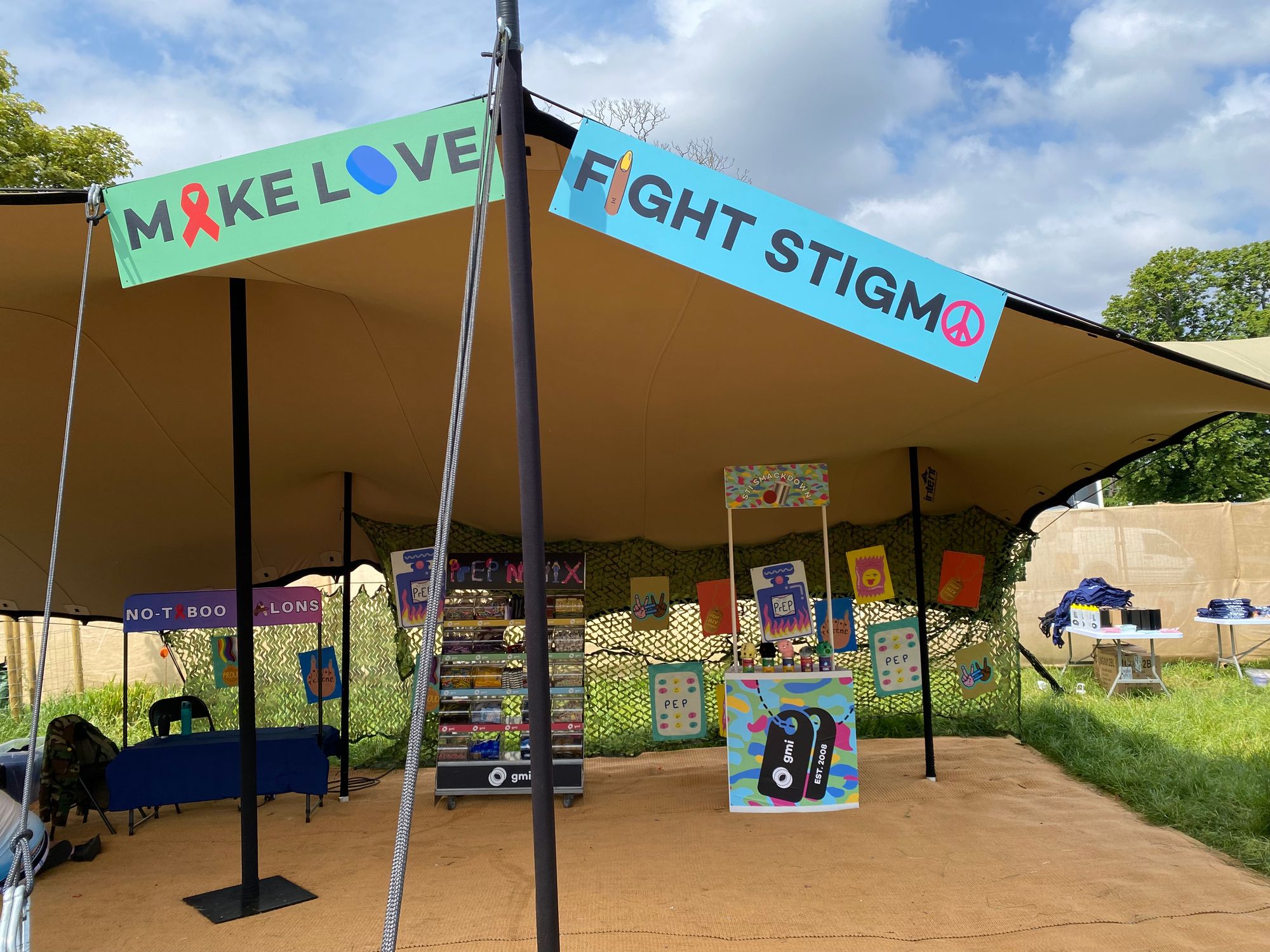
Working with the Festival Director we had a 15metre by 10metre Stretch Tent
]]>Mighty Hoopla is one of London's largest LGBTQ+ festivals. Our aim was to reintroduce the community to the GMI Partnership as London's leading charity-led HIV service, and increase uptake of HIV prevention tools.
Working with the Festival Director we had a 15metre by 10metre Stretch Tent which became a destination to learn more about our work. Branded as the GMI 'Love Shack' in 2022 and the 'Base Camp' in 2023, I created 4 zones including a 'PrEP N Mix' station, an 'STI Smackdown' game, a 'No Taboo Talons' nail bar, and a Testing zone beside our mobile testing van.
Working with a queer graphic designer, I created a range of assets to match the headliners for each year - a western theme for Steps (marking the 25th anniversary of 5,6,7,8) and an army theme Kelly Rowland (playing with her Commander single and Destiny's Child's Survivor as Beyoncé was also playing in London that weekend). This including:
- A wallet-sized 'Brief Guide to GMI'
- 'Volunteer with Us' wallet card
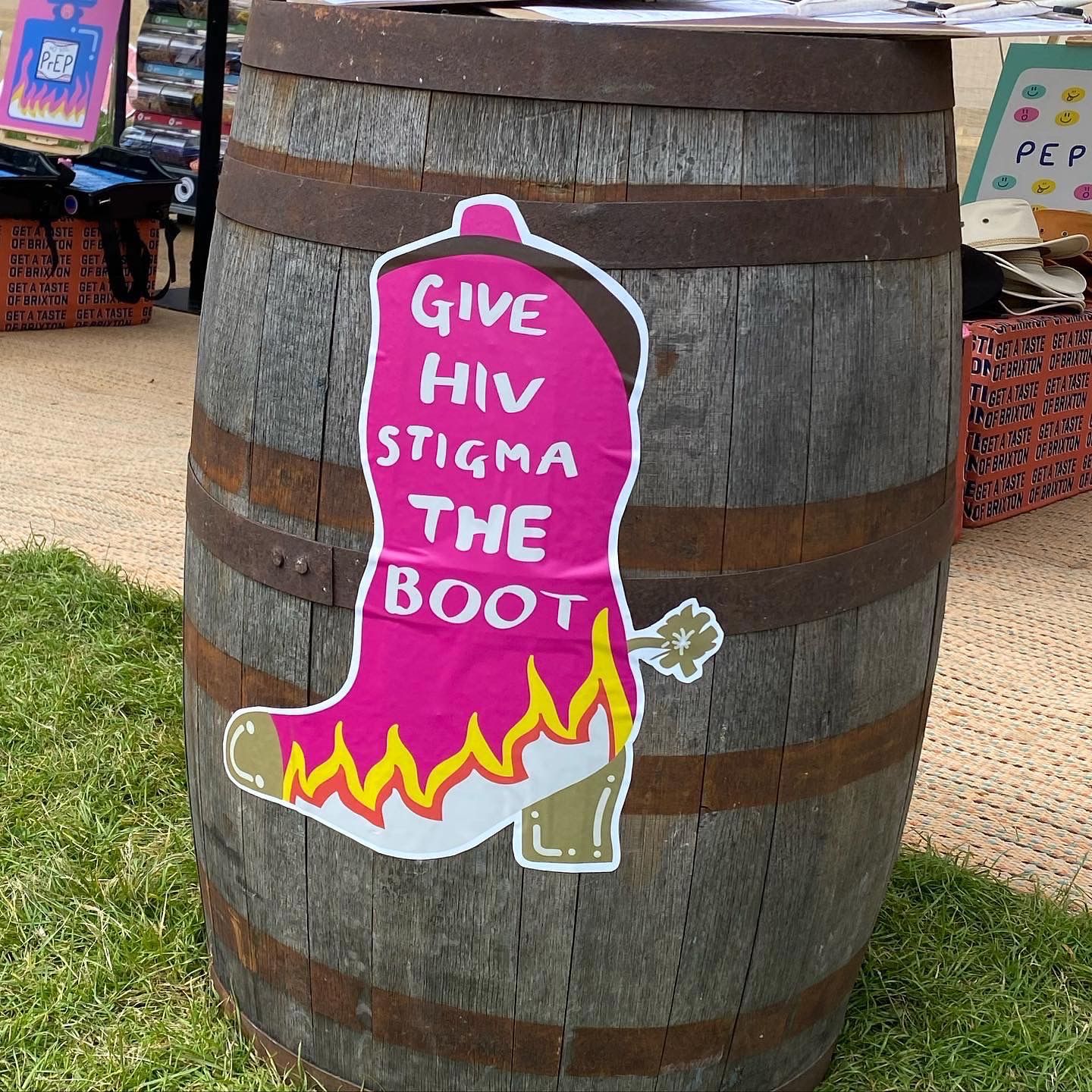
- Stigma-busting stickers
- Placards
- Zone stickers and signage
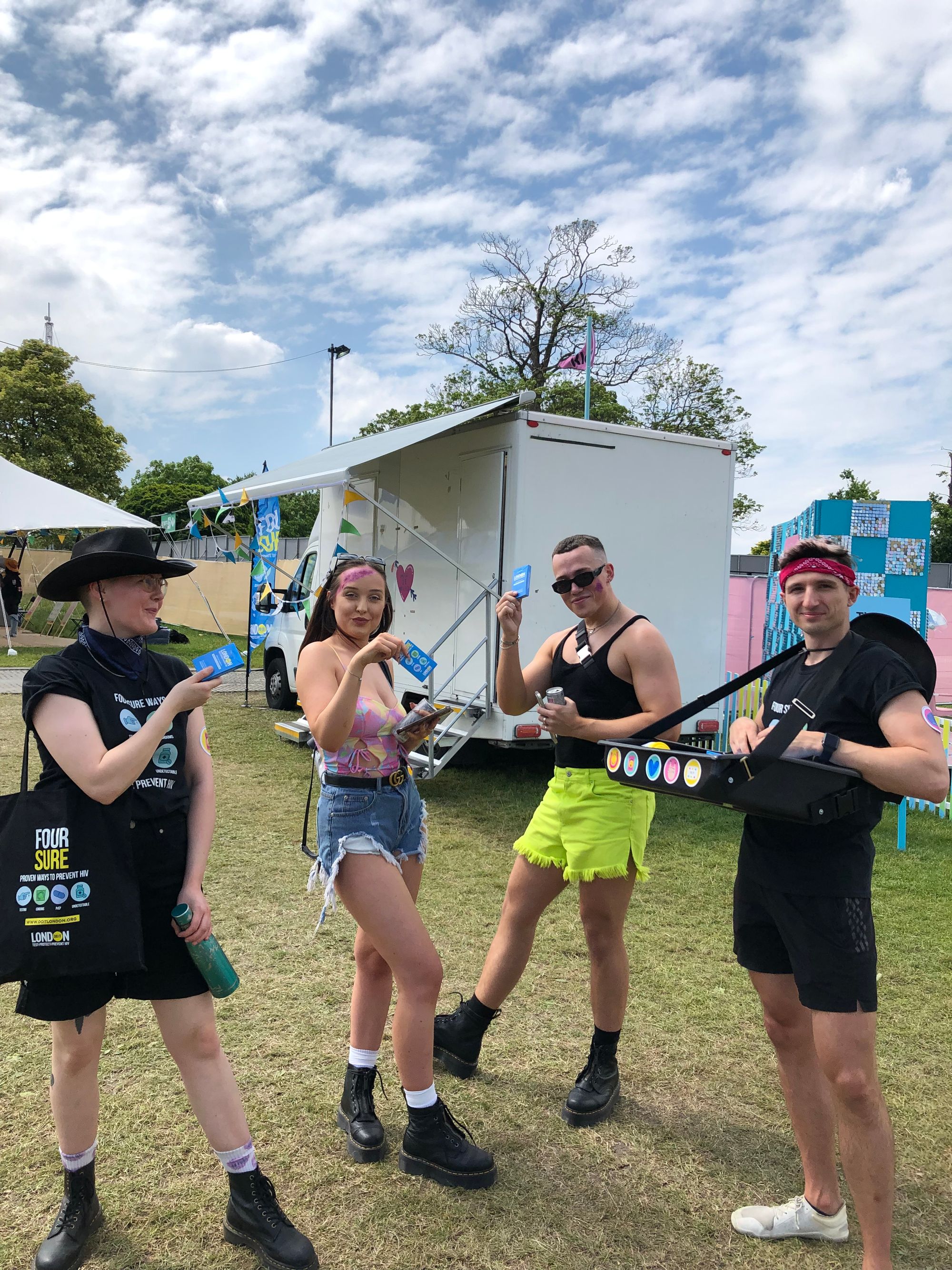
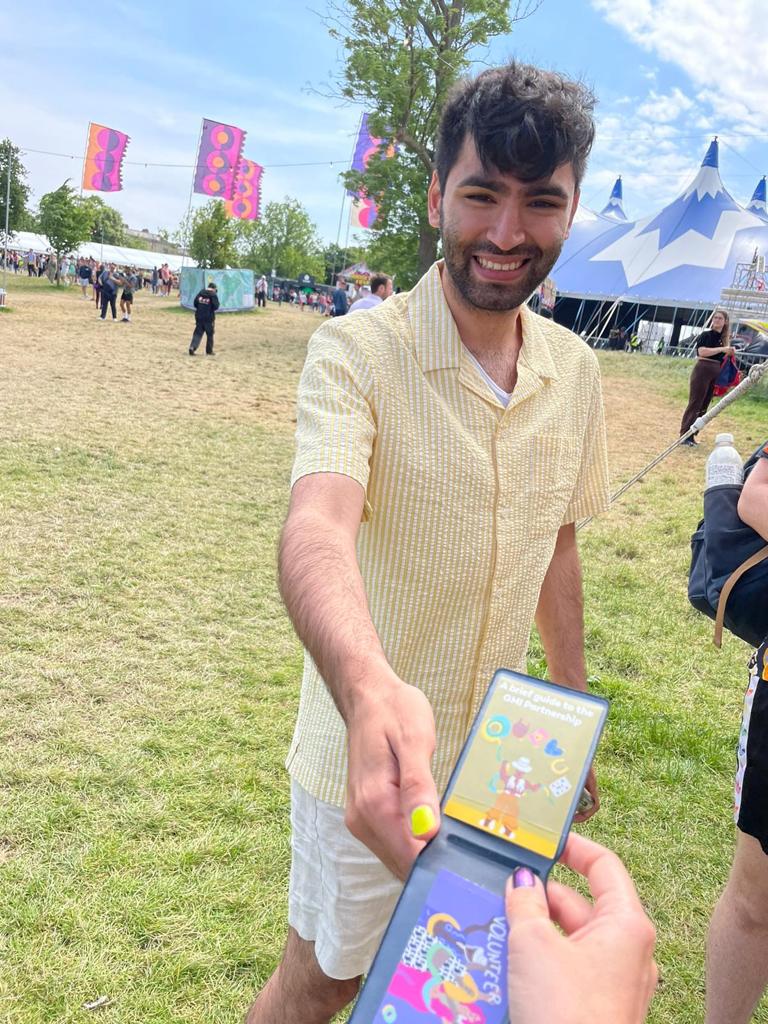
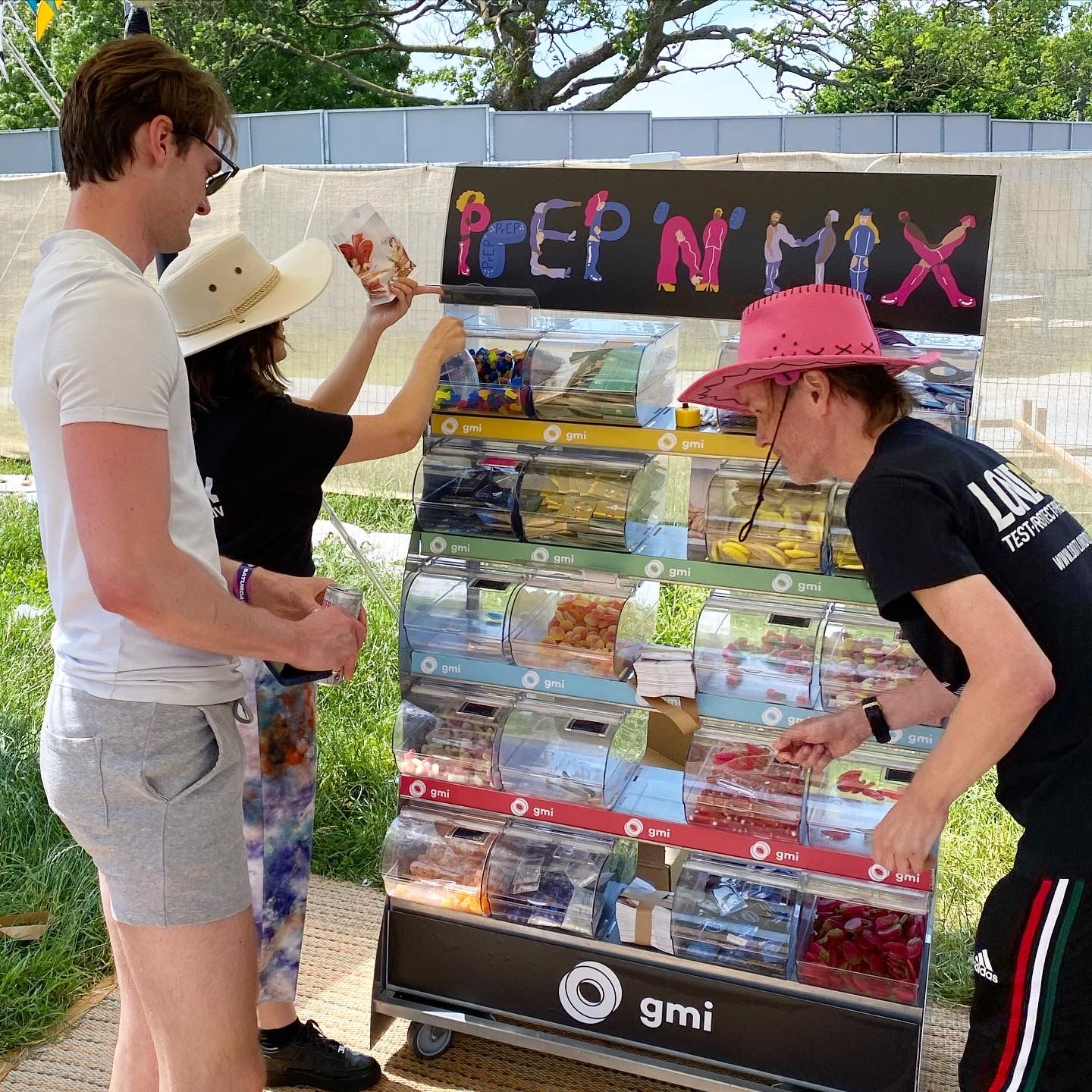
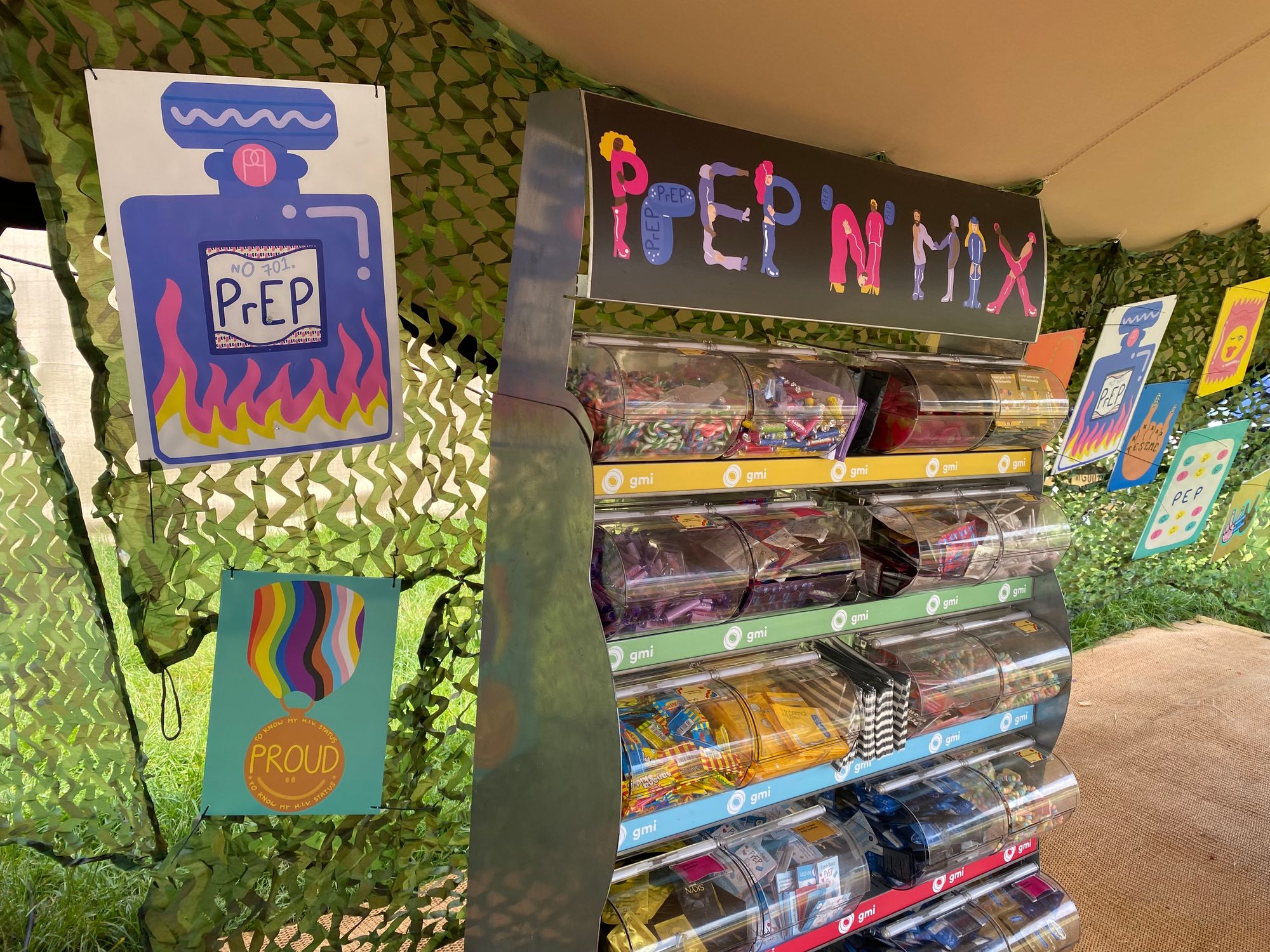
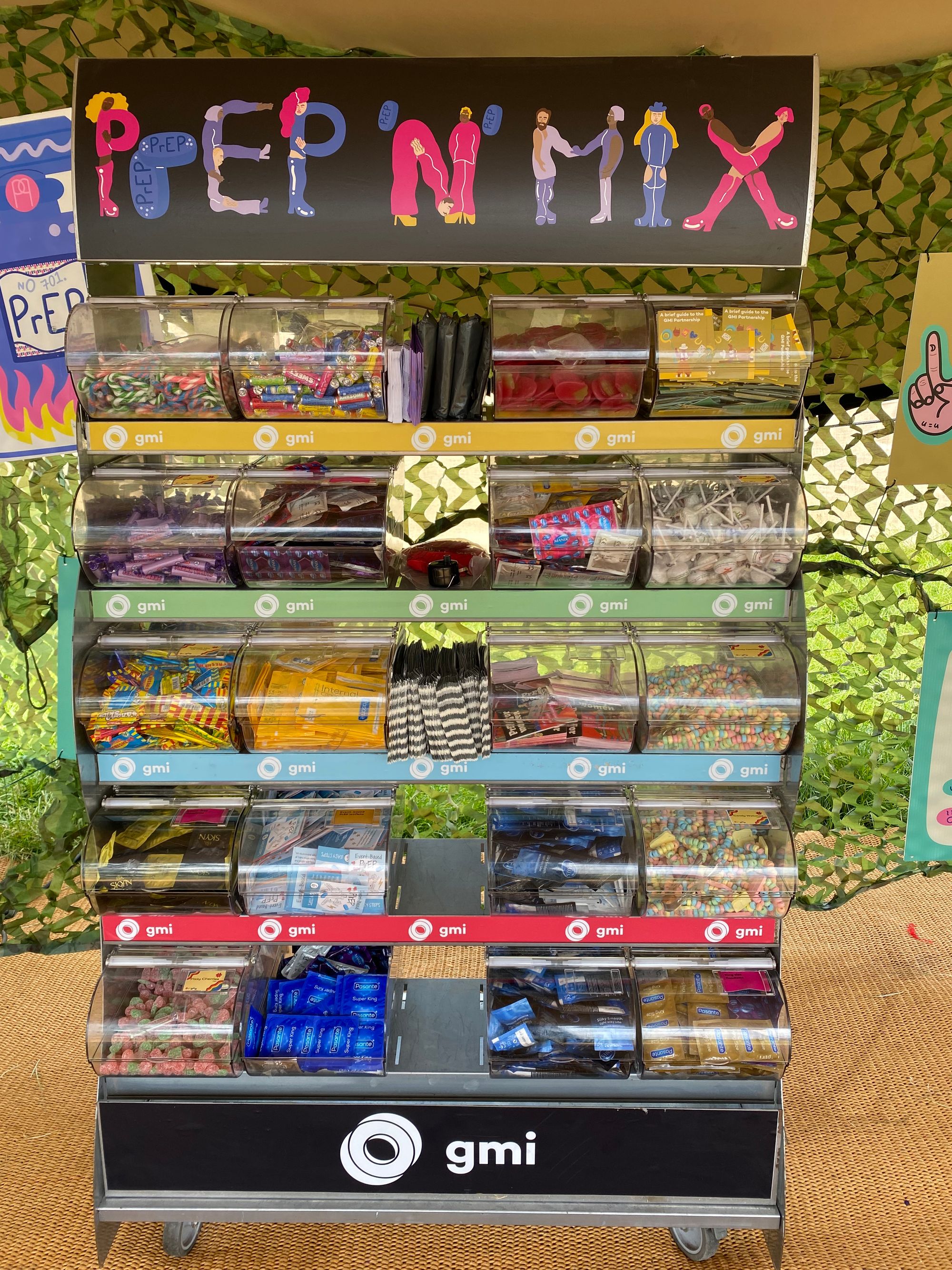
The PrEP N Mix station was filled with sweets and newly designed resources 'A Brief Guide to GMI' wallet-fold and 'Volunteer with GMI' business card.
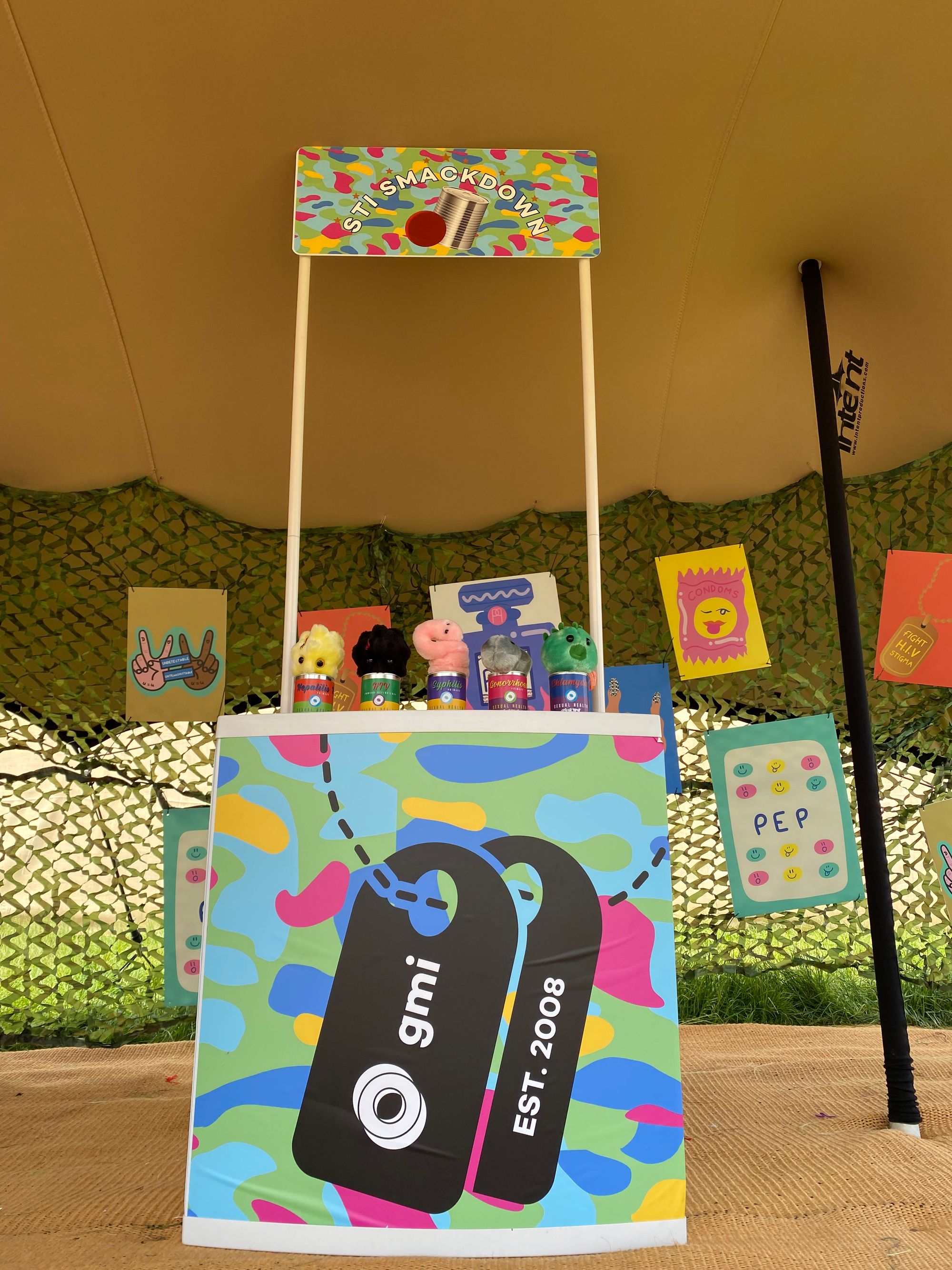
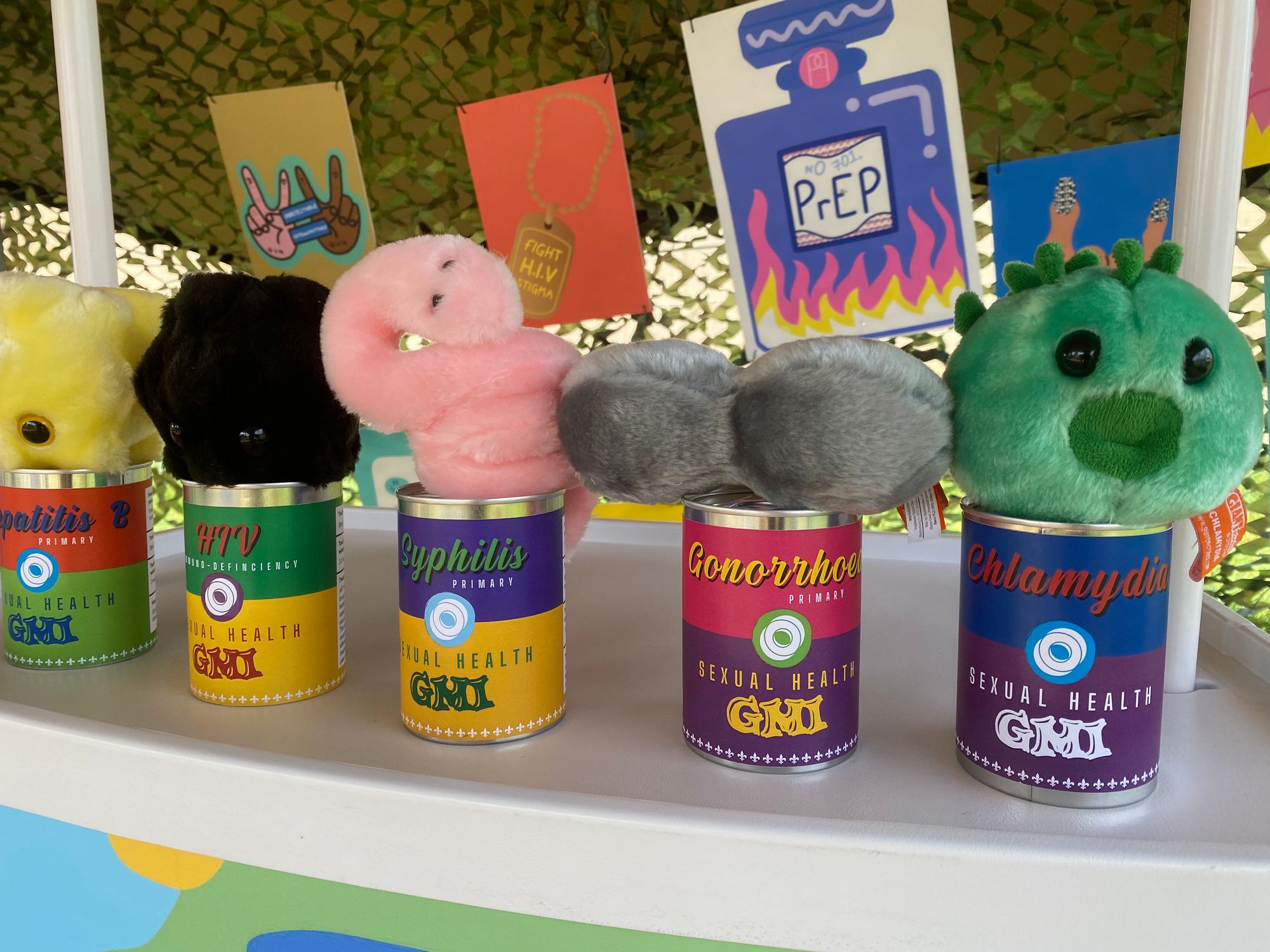
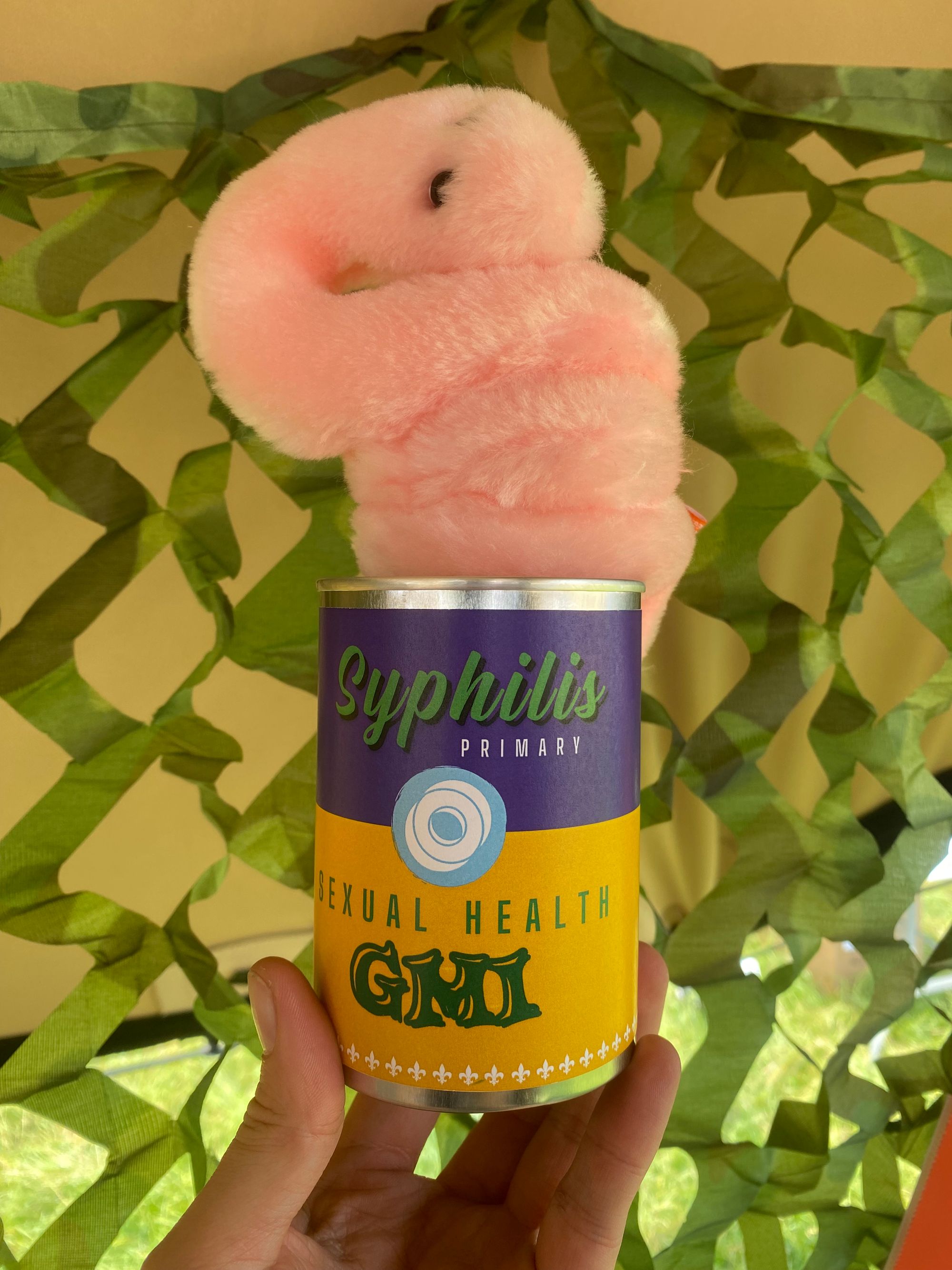
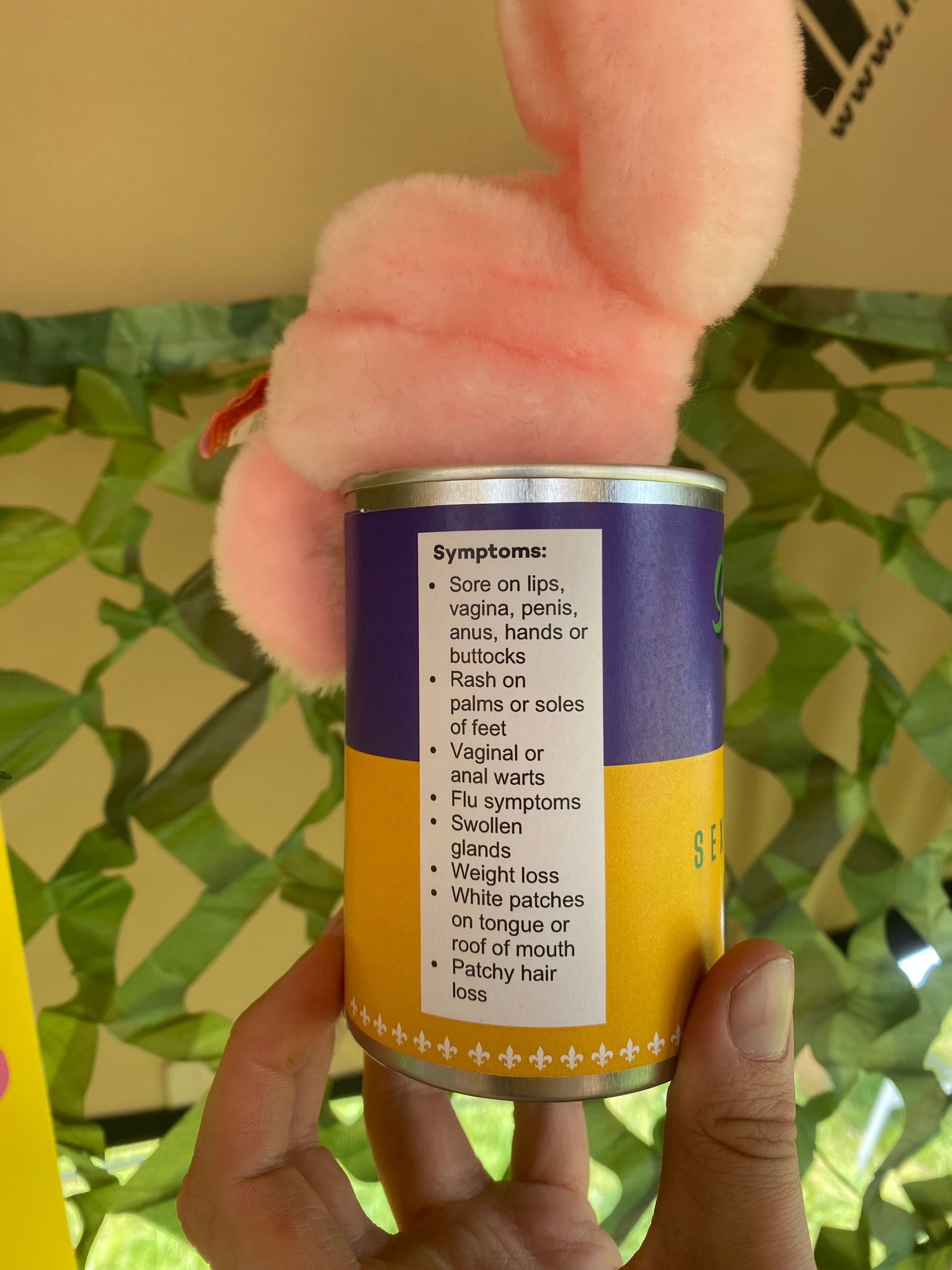
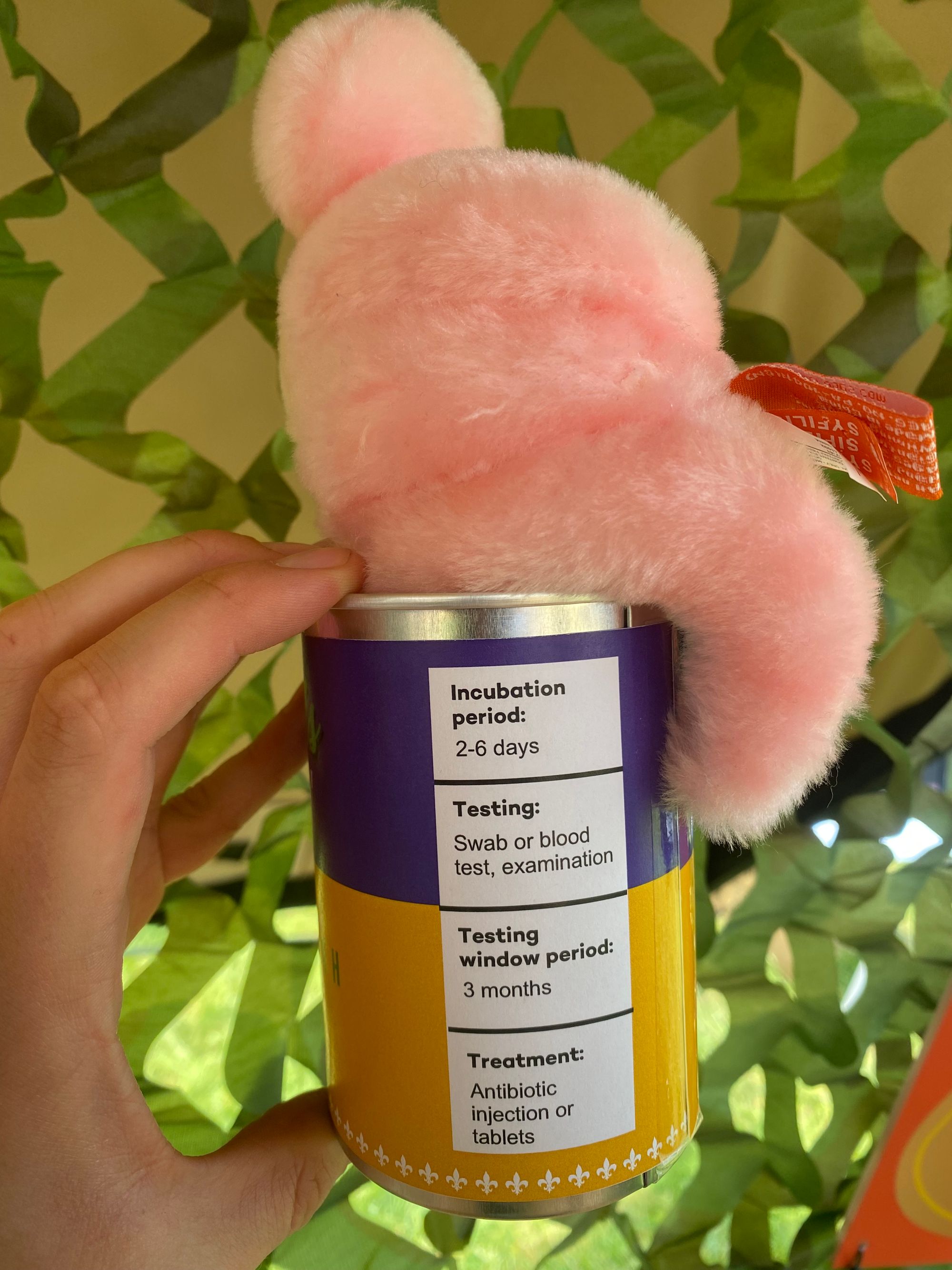
I designed Warhol-esque Soup cans for the STI Smackdown which detailed symptoms, transmission testing, and treatment for the 5 most common STIs amongst gay, bi and other men who have sex with men.
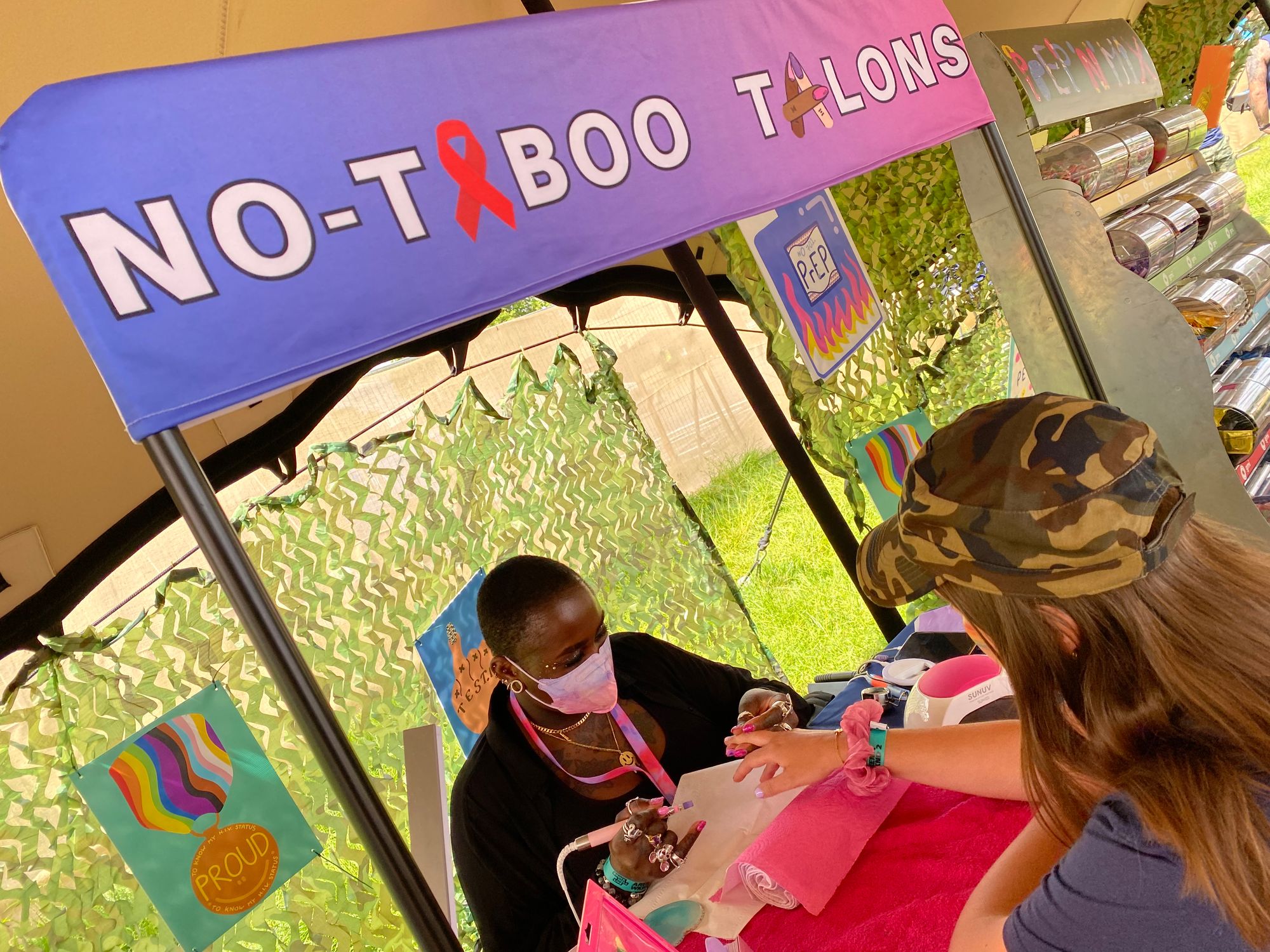
Inspired by Charlie Cragg's Nails Transphobia, we loved the idea of being tactial with attendees, giving them a choice of pride and HIV activism inspired designs in our No Taboo Talons nail salon. It also meant that we could talk the need for visibility in addressing the stigma that still faces many of our clients and communities.
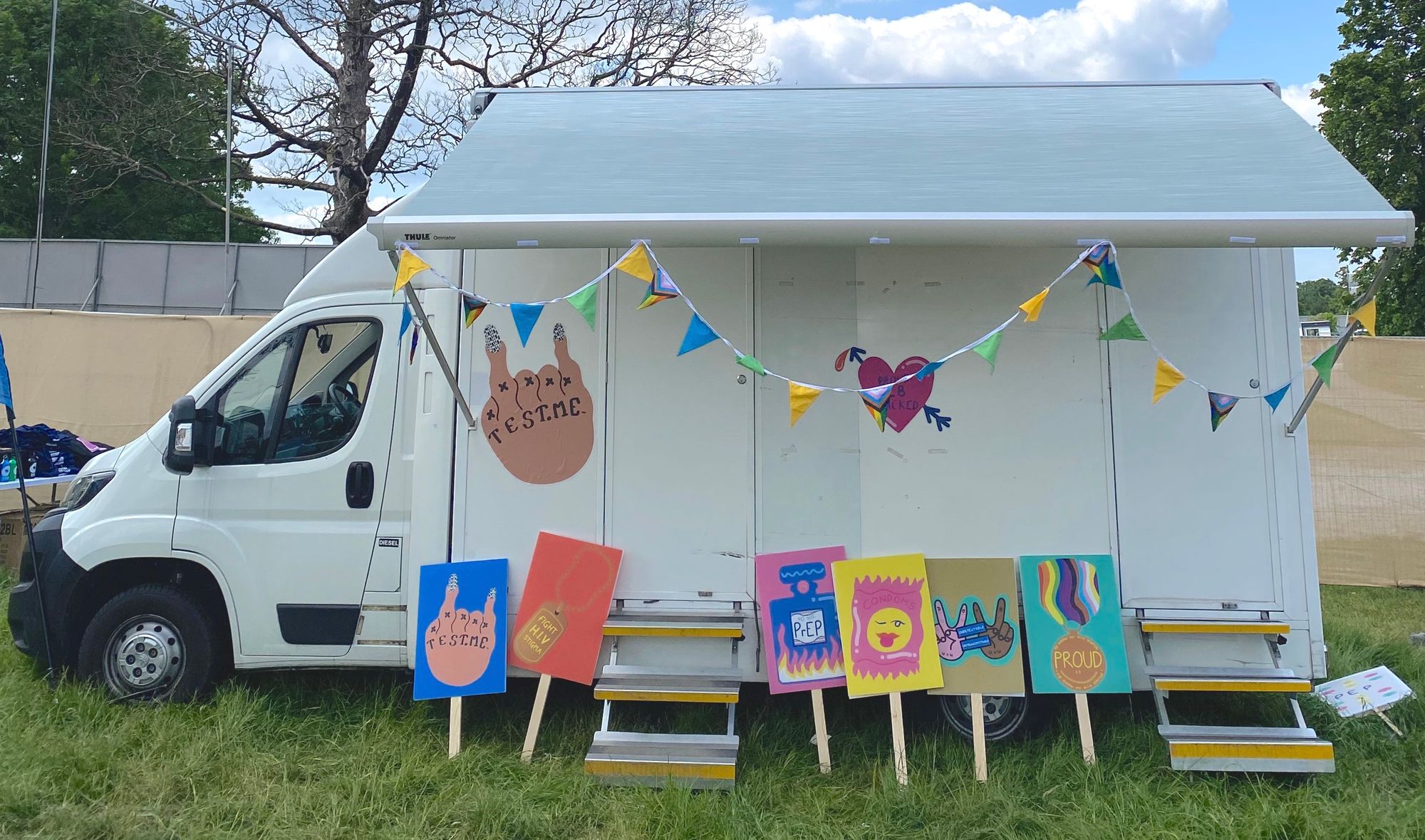
We tested 26 people for HIV with XXX clients having never tested for HIV before.
*Staff and volunteer assets gallery
Staff and Volunteers received in-person and online briefings, a comprehensive briefing sheet, and QR code posters to help them navigate and evidence our work over the weekend.
*Covid bits
To reduce the
]]>I started my role as Prevention & Testing Team Manager at Positive East during a 2nd national lockdown. KPIs for the local authority contracts focus on testing for HIV & STIs, and increasing knowledge and confidence to reduce the likelihood of HIV & STI transmission.
*Covid bits
To reduce the likelihood of Covid transmission I developed and implemented covid-secure protocols including testing, social distancing, FFP2 masks, and sanitisation between clients. All staff and volunteers were trained on the protocols through webinars and UK Gov assets. They also received an individual covid risk assessment to assess their health, health anxiety and to understand their living arrangements. I developed venue risk assessments, service risk assessments and a pack of resources for each venue including posters and guidance for service delivery.
*Testing service - Simplybook
To manage expectations and reduce the likelihood of gatherings that weren't in line with social distancing, I implemented an appointment booking system for clients of the testing service. The system is venue-lead with details on the borough, frequency of the service and a link to map to calculate the distance of the venue. We found through surveying that there's an even split between a demand for clinics based on their location and their immediate availability. For some clients they want to access the service in anonymised spaces such as libraries and community centres, whereas others seek out opportunistic testing in cruising areas and market spaces, through the use of our mobile testing van.
*Technicolor and BeeLive
Our information and advice, and training KPIs were achieved through an online events programme aimed at communities disproportionately impacted by HIV. This included BeeLive and Technicolour, FacebookLive sexual health discussions led by my team of Prevention & Testing Coordinators and guests who work across the health and activism sectors.
*Workshop posters
We developed a series of training and workshops aimed to increase awareness of developments in HIV prevention and treatment, advertised through Eventbrite and delivered through Zoom. We ensured that the sessions were interactive through polls, breakout rooms, videos and animations, and analysing Public Health England charts. Feedback and knowledge-gained was gathered through Formstacks which was analysed through our CRM platform Salesforce, and exported easily for quarterly monitoring.
]]>